
We use affiliate links and may receive a small commission on purchases.
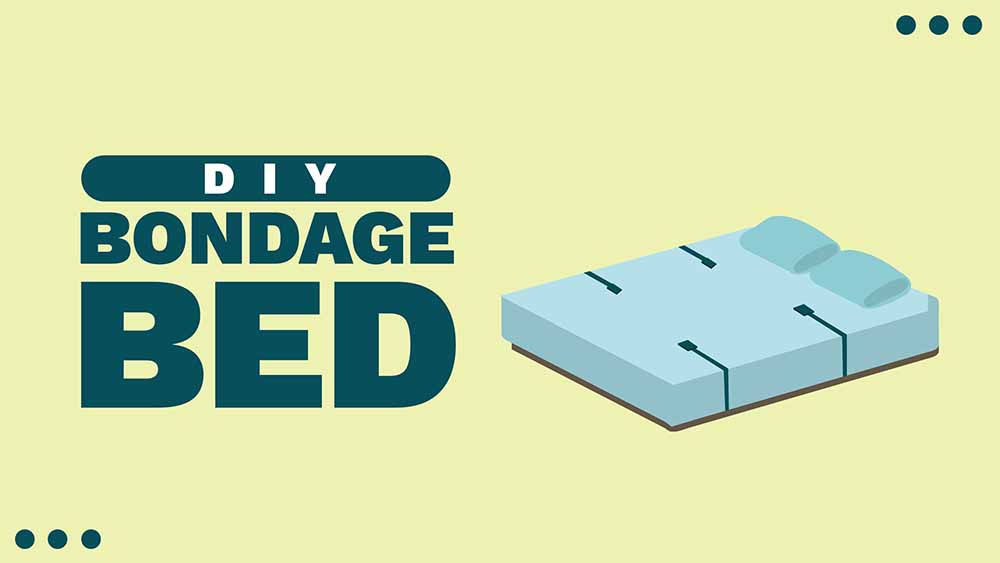
Bondage gear and sex toys can be pricey (the excellent Dore Alley Dungeon Bed costs more than my first car) so you may be thinking “I could make that myself!” You wouldn’t be the first person to think that, and let’s just say that there are reasons why bondage gear continues to be a thriving niche industry. It’s not as easy as it may seem to produce gear that’s safe, comfortable, aesthetically pleasing, safe, user-friendly, and did we say safe?
However, if you’re determined to try, we’re determined to try to help you avoid a disaster. Keep reading to learn more!
A BDSM bed needs to support the weight of (at least) two adults, and it needs to be able to stand up to the force of (at least) one of those adults straining against attachment points. It should also be comfortable for both sleep and play.
We believe that this is a mission best entrusted to those who have trained for it. The potential risk is very high. But we also understand that everyone’s life is different and not everyone can obtain a professionally built piece, so we are going to discuss the least unsafe options.
Why You Should Trust Us
The folks who have put together this article have been immersed, both personally and professionally, in the world of sex toys and sex furniture for over a decade now. We’ve seen, done, tested, and reported on it all. We know how quality sex furniture and bondage gear perform, and more importantly, we know what will put people at risk.
This guide was assembled by Sandra Larson, one of the co-founders and lead product testers here, with contributions from her husband and co-founder Tim Larson as well as our experienced product tester Rachel Sommer. Our staff has also done loads of research, and we give special credit to the r/BdsmDIY subreddit at reddit.com.
What Is a DIY Bondage Bed?
A bondage bed is a very sturdy bed that is designed for BDSM activities, specifically restraints. It has at minimum points where restraints can be attached (usually at the headboard/bedposts, footboard/bedposts, and at several points on the frame), and the better bondage beds have actual restraints built in.
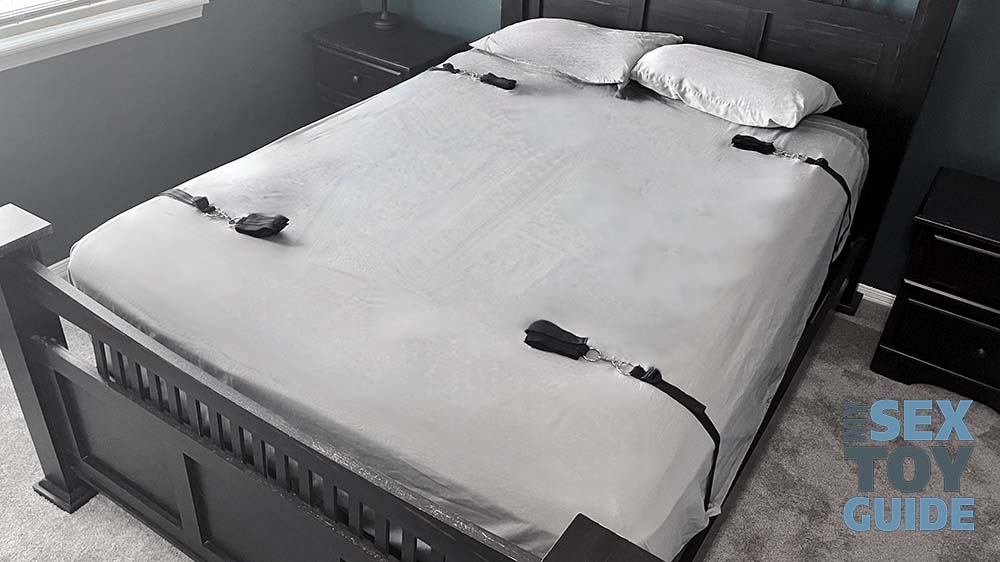
If you want a bondage bed but find the professionally made ones unattainable (we get it!), but you’re not confident in your carpentry skills, an excellent compromise is a system that you can install and use with your current bed. The Bondage Boutique Under the Bed Restraint System is a whole lot less expensive than an entire bespoke bed, and it is super easy to set up.
How to Use Homemade Bondage Beds
For any kind of bondage play, you and your partner should have an open and explicit discussion around boundaries and expectations. Enthusiastic, informed consent is the name of the game here and you both need to be on the same page. Remember that if it’s not “hell yes,” then it’s “hell no” and don’t go there.
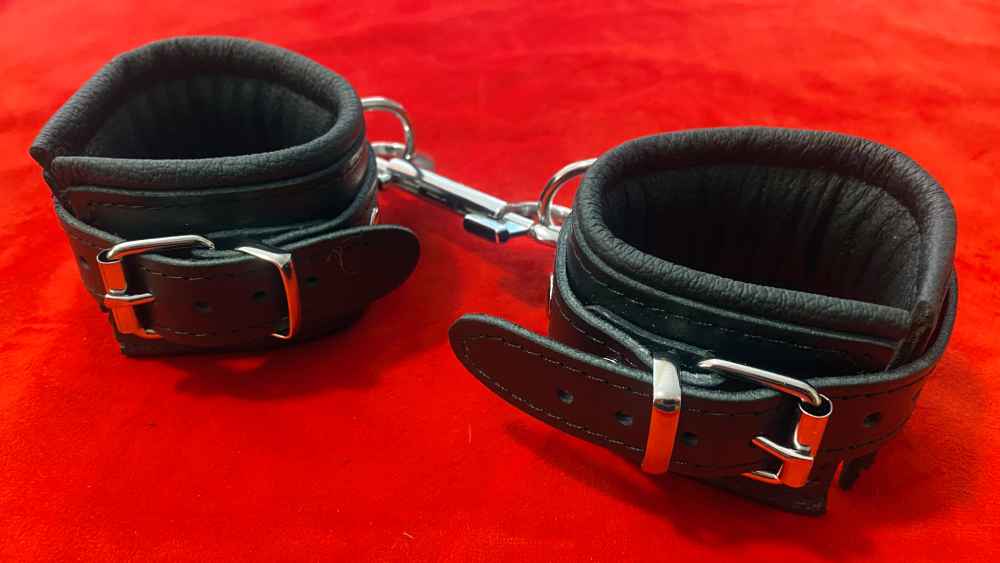
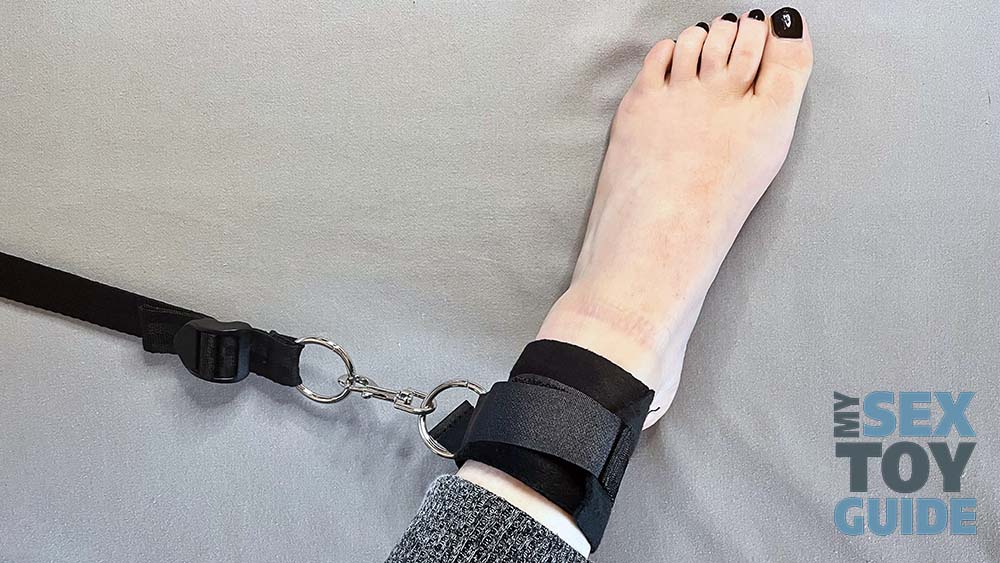
Then you need to decide, preferably together, what kind of restraints you want to use. Most adult retailers have a very nice selection of cuffs in a variety of styles. Make sure that the cuffs fit well and that they are soft and smooth on the inside. If you don’t want to purchase cuffs or you don’t like the look, you can use satin scarves or men’s neckties. Whatever you choose needs to have a quick-release option. Commercially produced cuffs almost always do, and you can create one with a carabiner for your DIY restraints.
Before you get into your play session, check the latches or knots. They should be secure but not overly tight and they should not hit any pressure points — we want any pain to be intentional!
You can incorporate other kinds of sensory play to stimulate the restrained partner. Try some feather ticklers or ice cubes. If the restrained partner has some experience and is comfortable with it, they can also be blindfolded and/or gagged. Blindfolds may not seem like “advanced” BDSM, but a lot of folks report that each sensory deprivation (touch, sight, etc.) increases the intensity exponentially.
And we’ve said it before and we’ll say it again: keep the lines of communication open. Check in with each other regularly. Set up a safe word that means an immediate full stop (it’s a lot easier to go back to playtime if it was a “false alarm” than to recover from unintentional physical or emotional trauma).
Is Making a Homemade Bondage Bed Safe?
Probably not. Most of us do not have the knowledge, skills, or equipment to construct what needs to be a sturdy, stable, and load-bearing piece of furniture. And honestly, by the time you buy all the materials and tools (good tools are not cheap!) that you need to build your bed, you probably won’t be all that far off the price of a commercially made one. However, if you’re still reading, you’re probably still interested, so we’re going to present what we’ve found out there.

How to DIY as Safely as Possible
We are providing information; what you do with it is up to you. Any action that you take is at your own risk. Please review our Terms of Service.
This project incorporates a cage/kennel under the bed. It starts with a commercially produced bed frame, which means that it is already much safer than a full DIY endeavor. If you are not interested in the cage, you can skip that part! Also, if this matters to you, it will look like a “normal” bed at first glance.
Materials Needed:
- Wooden bed frame, with at least 2’ of clearance under the frame (or risers to elevate the bed)
- Plywood sheets (preferably ¼” thick)
- Mesh screening
- Hinges
- A latch
- Sturdy eye bolts
- Carabiners (optional)
- Drill, screws, hammer, nails, saw, sandpaper, other tools as needed
Step-by-Step Guide:
- Attach eye bolts to the headboard/bed posts at the top of the bed. You can attach them to the back of the headboard/bed posts (so between the bed and the wall) for discretion if desired.
- Attach eye bolts to the footboard/bed posts at the bottom of the bed. These will be easier to cover with a quilt so you can put them on either side.
- Attach eye bolts to the bed rails on the side of the bed. We recommend three sets evenly spaced, but you know better than we do how you plan to use them.
- These bolts are now your attachment points. If you are going to restrain your partner with ropes or chains, you should add a carabiner as a quick-release point. If you are going to use cuffs or other gear that already has a quick-release function, you can attach them directly to the eye bolts.
If you want to play a little harder than “just” tying each other up, you can build a cage/kennel that goes under the bed.
- If your bed frame does not have at least 2’ of clearance, put it on risers (available at most big-box hardware stores) so that there is sufficient clearance. Note that most people will need a stepstool to get into a bed that is 2’ off the ground, but there are some pretty ones out there.
- Use the plywood sheets to construct a three-sided box that is at least 5’ long, 3’ wide, and 2’ tall (if the person to be caged is a larger person, you will need a larger box and possibly more clearance).
- Craft a fourth side to the box, cut a large window in it, sand the edges of the window, and use the mesh to make a screen.
- Attach the screened door with hinges at the top and a latch at the bottom. This is now a cage that can be discreetly stored under the bed — we recommend a bedskirt for further discretion.
- You can put a soft blanket in the cage for your “pet.” There are some very nice waterproof, washable pet blankets available at larger pet stores or even some big-box retailers.
Note: We advise starting with a commercially manufactured bed frame (and commercially manufactured bed risers if needed) since most of those have been engineered and tested to safely support two adults. We think that this eliminates much of the risk of building your own bondage bed. However, you will still be exerting force against the eye bolts, so we recommend buying the sturdiest ones that you can find and testing them thoroughly before your first play session.
What’s Not Safe at All
Playing on the edge might be fun but jeopardizing your (and your partner’s) health and safety can lead to some very un-fun consequences. Risks that aren’t worth it include:
- Flimsy or Unsafe Restraints: We get it, when you’re in the moment, you use what’s on hand. But restraints that aren’t strong enough to actually restrain can break or snap, which can lead to injury. Also, restraints that are too narrow or rough in texture can cut into flesh (not in the fun way). Don’t use duct tape either; it can cut off circulation and it’s hard to remove.
- Subpar Knot-Tying Skills: Knots are not all the same! The right knots for rope play are secure and do not slip or tighten, but are also easy to untie when needed. If you haven’t tied anything but your shoelaces since you earned your Scout badge, we strongly suggest brushing up on shibari or at least basic knots.
- Not Setting Up a Safe Word: Establishing a safe word is a good idea in general, but absolutely essential for BDSM or other slightly risky play. Decide on a word that is unmistakable and not likely to be uttered by accident, like “pineapple” or “banjo,” and agree that it means full stop, no questions asked. (Of course you can and should ask questions and debrief afterwards, but in the moment, you stop. Immediately.)
Other DIY Ideas
If the idea of building your own bed feels like a little too much, we have some other ideas (and, of course, articles about those ideas, which we have linked!)
- Sex Swing: DIY-ing a sex swing requires less investment than building your own bondage bed. (It’s also easier to tuck away in a closet if your homemade project ends up looking, well, homemade.) You can check out the Fetish Fantasy Deluxe swing as inspiration, but you may like it enough that you end up buying instead of making. This swing is exceptionally well made with comfortable stirrups and straps.
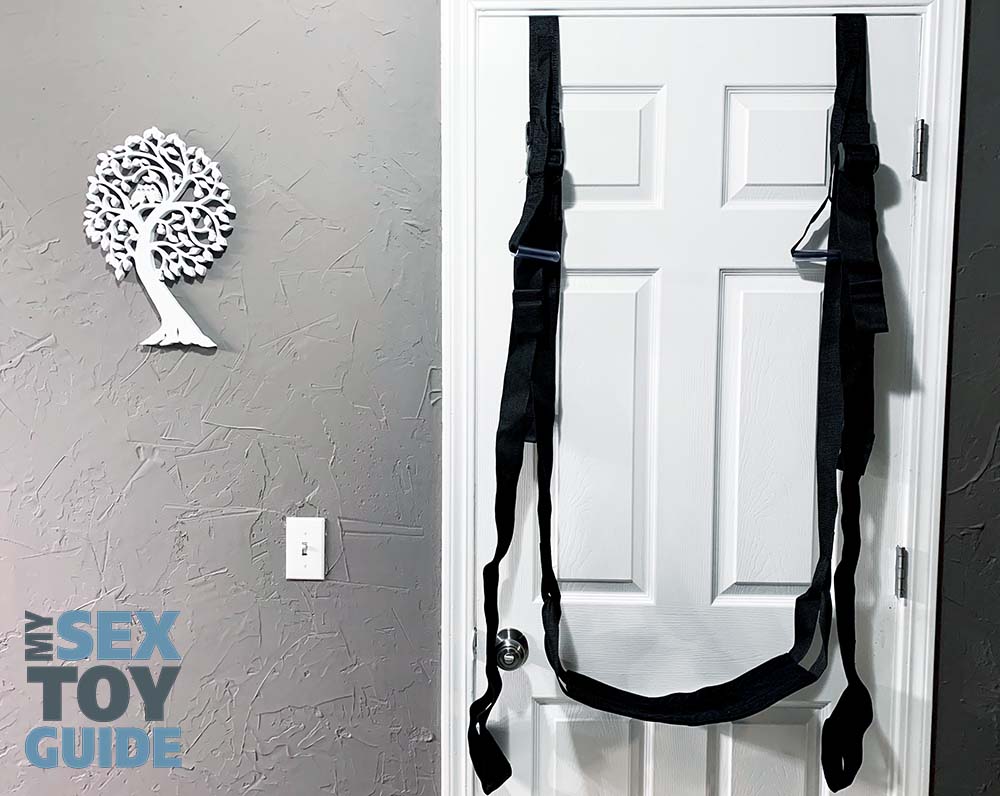
- Blindfolds and Restraints: You can also craft your own blindfolds, restraints, and other toys. While you still need to be careful and prioritize safety, these projects are not overwhelming and typically do not require carpentry skills or tools.
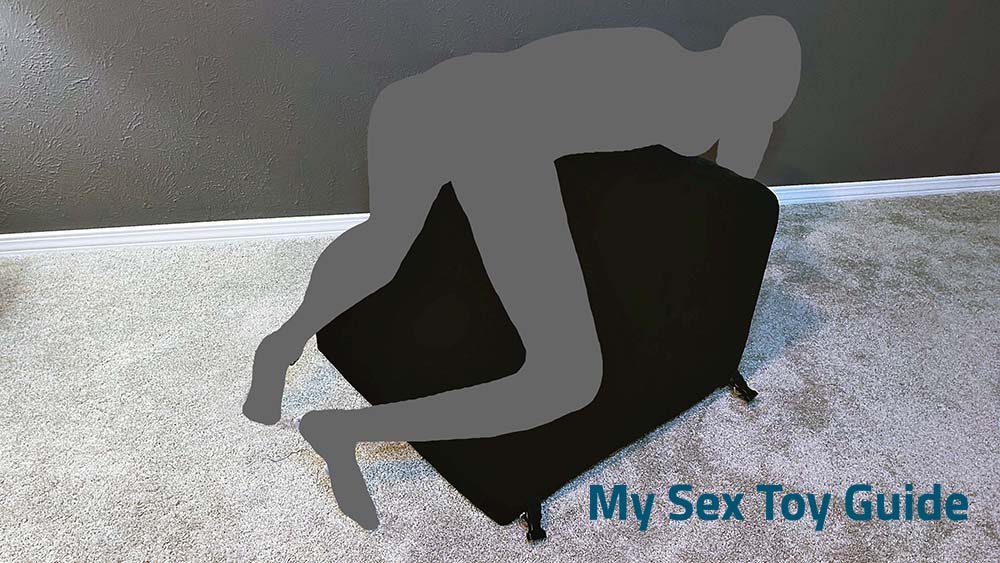
- Spanking Bench: You can turn pretty much any ottoman or small bench into a spanking bench by securing pillows or other padding over the top and edges — but we want to recommend the Liberator Steed as one of the top spanking benches out there. It’s made with very high-density memory foam so you’ll both feel some resistance, and the microfiber cover is both waterproof and washable.
Why Is It Better to Buy Commercial Gear?
While the idea of being able to completely customize your bondage bed or other gear is tempting, there are several reasons why we recommend buying commercially produced BDSM furniture. You can still do some customizations to make it yours once you get them home, but you’ll also get:
- Versatility: Professionally designed and manufactured bondage beds are made to appeal to as many buyers as possible, which means that they can be used in a lot of ways. They typically feature quite a few attachment points that can be enjoyed in different configurations.
- Comfort: Manufacturers who make bondage beds have access to tools and materials that most of us can’t just buy at a big-box store. As a result, commercially produced beds have better support, cushioning, and ergonomics.
- Safety: This is the bottom line; nothing else matters if you and your partner aren’t safe. Plus, you can play a lot harder when you know that you can trust your gear. This is worth paying money for!
Happy spanking!
Maggie

- 10 Best Anal Sex Positions | For Straight & Same-Sex Couples - October 8, 2026
- 8 Best Pegging Positions For Beginners! - October 6, 2026
- The 9 Best Gay Sex Positions For People With Penises - October 1, 2026